Roof maintenance pricing plans are crucial for the upkeep of your home's most important asset - the roof. Understanding the various pricing structures and factors influencing them can help you make informed decisions about maintaining your roof's integrity and longevity.
In this guide, we delve into the intricacies of roof maintenance pricing plans to provide you with a complete picture of what to expect and how to navigate the options available.
Types of Roof Maintenance Pricing Plans
When it comes to roof maintenance pricing plans, there are several options available in the market to suit different needs and budgets. These plans can be broadly categorized into subscription-based plans and one-time payment plans. Each type has its own set of features and benefits that cater to the preferences of homeowners.
Subscription-based Plans vs. One-time Payment Plans
- Subscription-based Plans:
- Regular, recurring payments for ongoing roof maintenance services.
- Offers peace of mind with scheduled maintenance visits.
- Costs spread out over time, making it more budget-friendly.
- Typically include priority scheduling for repairs or emergencies.
- One-time Payment Plans:
- Single upfront payment for a specific set of maintenance services.
- Suitable for homeowners who prefer a one-time investment in their roof.
- No long-term commitment required, providing flexibility.
- May be more cost-effective for those who do not need frequent maintenance.
Benefits of Long-term Contracts for Roof Maintenance Services
- Consistent Service: Long-term contracts ensure regular maintenance visits, reducing the risk of major issues.
- Cost Savings: Bundling maintenance services under a contract can often lead to cost savings compared to one-time services.
- Prioritized Service: Contractors prioritize clients with long-term contracts, offering quicker response times for repairs or emergencies.
- Extended Lifespan: Regular maintenance through long-term contracts can extend the lifespan of your roof, saving you money in the long run.
Factors Influencing Roof Maintenance Pricing

When it comes to determining the pricing of roof maintenance plans, several key factors come into play. Factors such as the size and type of the roof, as well as the geographical location of the property, can significantly impact the overall cost of maintenance.
Size and Type of Roof
The size and type of the roof are crucial factors that influence the pricing of maintenance plans. Larger roofs typically require more materials and labor, resulting in higher costs. Additionally, roofs with complex designs or materials that are more difficult to work with may also incur additional charges.
For example, a flat roof may have different maintenance requirements compared to a sloped roof, leading to variations in pricing.
Geographical Location
Another important factor that affects roof maintenance pricing is the geographical location of the property. Different regions may have varying weather conditions that can impact the wear and tear on roofs. For instance, areas prone to harsh weather conditions such as heavy snowfall, extreme heat, or frequent storms may require more frequent maintenance to ensure the roof remains in good condition.
As a result, roof maintenance pricing can differ based on the specific climate and environmental factors of a particular location.
Pricing Models for Roof Maintenance

When it comes to pricing models for roof maintenance services, there are several approaches that companies can take to determine the cost of their services. Two common pricing models are tiered pricing and performance-based pricing. Additionally, seasonal discounts or promotions can also play a role in influencing roof maintenance pricing.
Tiered Pricing for Roof Maintenance Services
Tiered pricing is a pricing model that involves offering different service packages at different price points. Companies may offer basic, standard, and premium packages with varying levels of service and corresponding prices. This allows customers to choose the package that best fits their needs and budget.
Tiered pricing can be beneficial as it provides transparency and flexibility to customers, allowing them to select the level of service that aligns with their requirements.
Advantages of Performance-Based Pricing Models
Performance-based pricing models tie the cost of roof maintenance services to the performance or results achieved. For example, companies may charge based on the square footage of the roof, the type of maintenance required, or the condition of the roof.
This model incentivizes efficiency and quality work, as companies are rewarded based on the outcomes delivered. Performance-based pricing can lead to more accurate pricing estimates and a focus on delivering value to customers.
Seasonal Discounts or Promotions for Roof Maintenance
Seasonal discounts or promotions can impact roof maintenance pricing by offering customers reduced rates during certain times of the year. For instance, companies may provide discounts during the off-peak season when demand is lower or run promotions during holidays or special events.
These discounts can incentivize customers to schedule maintenance services at specific times, leading to a more even distribution of work for companies throughout the year. Seasonal discounts and promotions can also attract new customers and encourage repeat business.
Additional Services and Costs
When it comes to roof maintenance plans, there are often additional services that can be included to ensure the longevity and durability of your roof. These services may come at an extra cost, so it's important to understand what they entail and how they impact the overall pricing of your maintenance plan.
Common Additional Services
- Roof Inspections: Regular inspections can help identify potential issues early on, preventing costly repairs down the line.
- Gutter Cleaning: Clean gutters are essential for proper drainage and can prevent water damage to your roof.
- Roof Coating: Applying a protective coating can extend the life of your roof and improve its resistance to the elements.
- Leak Repairs: Promptly fixing any leaks can prevent water damage and mold growth in your home.
Costs of Repair Services
Repair services included in maintenance plans can vary in cost depending on the extent of the damage and the materials needed for the repair. Some common repair costs include:
- Replacing damaged shingles or tiles
- Fixing leaks or cracks
- Repairing flashing or sealant
- Replacing damaged gutters or downspouts
Impact of Add-Ons on Pricing
Add-on services like gutter cleaning or roof inspections can impact the overall pricing of your maintenance plan. While these services may come at an extra cost, they can also help prevent more costly repairs in the future. It's important to weigh the benefits of these add-ons against their cost to determine the best plan for your roof maintenance needs.
Concluding Remarks
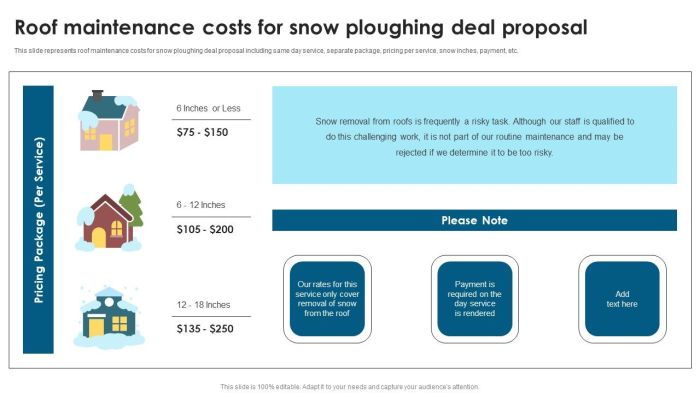
In conclusion, roof maintenance pricing plans play a significant role in the overall health and longevity of your roof. By choosing the right plan and understanding the key factors that influence pricing, you can ensure that your roof remains in top condition for years to come.
Whether it's selecting a subscription-based plan or opting for performance-based pricing models, the choices you make today can impact the future of your home.
FAQ Guide
What are the benefits of long-term contracts for roof maintenance services?
Long-term contracts often offer discounted rates and priority scheduling for maintenance services, ensuring regular upkeep of your roof at a lower overall cost.
How do seasonal discounts or promotions influence roof maintenance pricing?
Seasonal discounts can provide cost savings on maintenance services during off-peak times, making it an ideal opportunity to schedule necessary roof upkeep at a reduced price.
What are some common additional services offered in roof maintenance plans?
Additional services may include gutter cleaning, roof inspections, and minor repairs beyond regular maintenance to ensure the overall health of your roof.