Delve into the realm of AC installation cost as we unravel the key factors, types of systems, labor costs, and other important considerations. This comprehensive guide aims to shed light on the intricacies of pricing, empowering you to make informed decisions when it comes to installing an AC unit.
Factors influencing AC installation cost
When it comes to the cost of installing an air conditioning (AC) unit, several factors come into play that can influence the overall expenses. Understanding these factors can help you make informed decisions when considering an AC installation for your home or office.
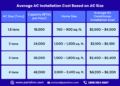
Size of the AC unit
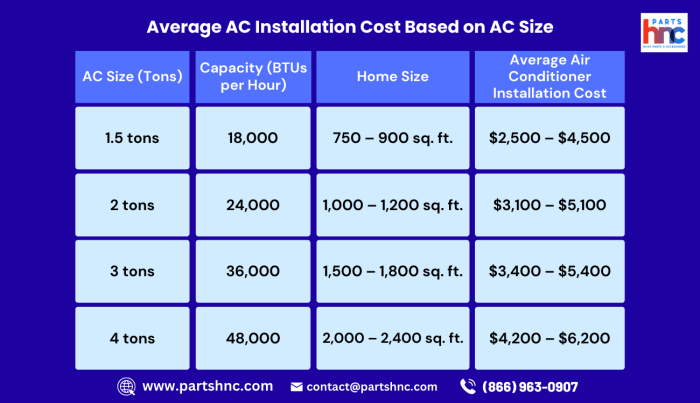
The size of the AC unit you choose has a direct impact on the installation cost. Larger units require more materials, labor, and potentially more complex installation processes, resulting in higher overall expenses.
Energy efficiency ratings
Energy efficiency ratings, such as SEER (Seasonal Energy Efficiency Ratio), can also affect installation costs. Units with higher energy efficiency ratings may cost more upfront but can lead to long-term savings on energy bills. Installation expenses for more energy-efficient units may be higher due to specialized installation requirements.
Complexity of installation location
The complexity of the installation location plays a significant role in determining the overall cost. Factors such as accessibility, existing ductwork, and structural modifications needed for installation can impact the installation expenses. Difficult-to-reach or unconventional installation locations may require more labor and materials, increasing the cost.
Additional features like smart thermostats
Including additional features like smart thermostats in your AC installation can also influence the overall cost. Smart thermostats offer advanced functionalities and connectivity options, but their installation may require specialized knowledge and additional equipment, leading to higher installation expenses.
Types of AC systems and their cost implications
When it comes to AC systems, the type you choose can have a significant impact on the installation costs. Let's compare the installation costs of central air conditioning systems versus ductless mini-split systems and explore how different types of AC units can vary in their installation expenses.
Central Air Conditioning Systems vs. Ductless Mini-Split Systems
Central air conditioning systems are typically more expensive to install compared to ductless mini-split systems. Central AC systems require ductwork throughout the home, which can increase installation costs significantly. On the other hand, ductless mini-split systems are easier to install since they do not require ductwork, making them a more cost-effective option for many homeowners.
Examples of Different Types of AC Units
Window Units
Window AC units are usually the most affordable option in terms of upfront costs, but the installation process can vary depending on the type of window and additional supports needed.
Portable Units
Portable AC units are easy to install and can be moved from room to room, but they are typically not as efficient as other types of AC systems.
Split Systems
Split systems consist of an indoor unit and an outdoor unit connected by refrigerant lines. While the installation of split systems can be more complex and costly, they are generally more energy-efficient and provide better cooling performance.
Labor costs involved in AC installation
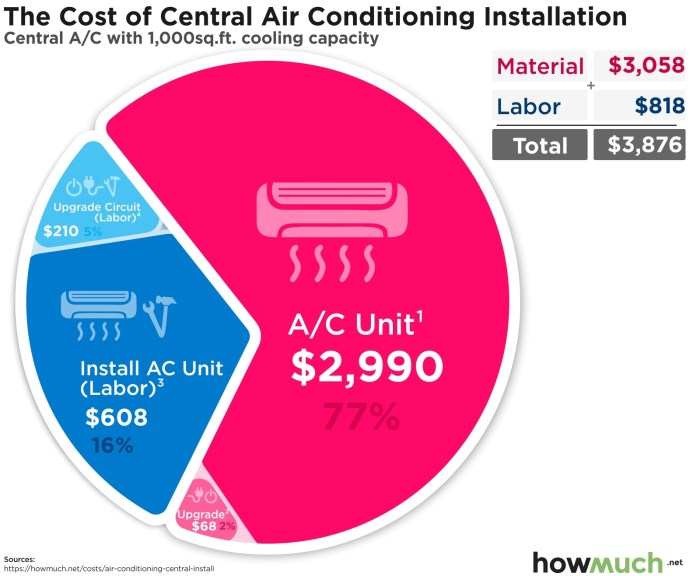
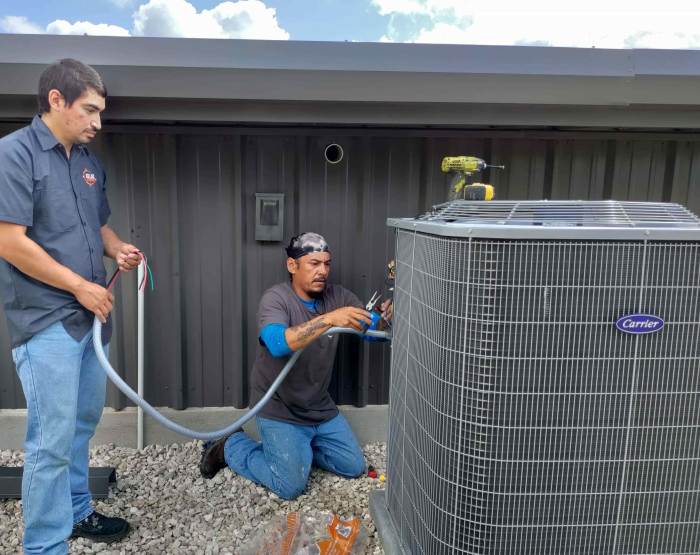
When it comes to AC installation, labor costs play a significant role in determining the overall expenses. These costs encompass the fees charged by the technicians or contractors for their services, which involve the actual installation of the AC system in your home or commercial space.
Breakdown of labor costs
The typical breakdown of labor costs in AC installation includes:
- Initial consultation and assessment of the installation area
- Removal of old HVAC system (if applicable)
- Installation of the new AC unit, ductwork, and electrical components
- Testing and calibration of the system
- Final inspection and cleanup
Variability based on contractor's experience and reputation
Labor costs can vary based on the experience and reputation of the contractor or technician hired for the job. Contractors with more experience and a solid reputation in the industry may charge higher fees for their services. However, their expertise and quality of work can often justify the higher costs, ensuring a smooth and efficient installation process.
Importance of hiring a licensed professional
It is crucial to hire a licensed professional for AC installation to ensure that the job is done correctly and safely. Licensed technicians have the necessary training and expertise to handle the complexities of AC installation, reducing the risk of errors or malfunctions in the system.
While hiring a licensed professional may come at a higher cost, the peace of mind and quality assurance they provide make it a worthwhile investment in the long run.
Additional costs to consider
When it comes to AC installation, there are potential additional costs that homeowners should take into account beyond the initial installation expenses. These costs can include maintenance expenses, warranty options, and unforeseen costs that may arise during the installation process.
Impact of warranty options
Warranty options can have a significant impact on the overall cost of AC installation. While opting for a longer warranty period may initially increase the installation cost, it can provide peace of mind and potentially save money in the long run by covering repair or replacement costs for certain components.
Homeowners should carefully consider the warranty options available and weigh the upfront cost against the potential future savings.
Examples of unforeseen costs
During AC installation, homeowners may encounter unforeseen costs that were not initially included in the installation estimate. These costs could arise from issues such as outdated electrical wiring that needs to be updated to support the new AC system, unexpected structural modifications required for installation, or additional labor needed to address unforeseen complications.
It is important for homeowners to budget for these potential additional costs to avoid any financial surprises during the installation process.
Closing Notes
In conclusion, navigating the realm of AC installation cost requires a keen understanding of various factors. By arming yourself with the knowledge shared in this guide, you are better equipped to make cost-effective choices that align with your needs and budget.
Quick FAQs
How does the size of the AC unit impact installation cost?
The size of the AC unit directly affects the installation cost as larger units require more materials and labor for proper installation.
What role do energy efficiency ratings play in determining installation expenses?
Units with higher energy efficiency ratings may have a higher upfront cost but can lead to long-term savings on energy bills.
Why is it important to hire a licensed professional for AC installation?
Hiring a licensed professional ensures the job is done correctly and can prevent costly repairs or replacements down the line.
Are there additional costs to consider beyond the initial installation?
Yes, homeowners should factor in maintenance expenses, warranty options, and potential unforeseen costs that may arise during installation.